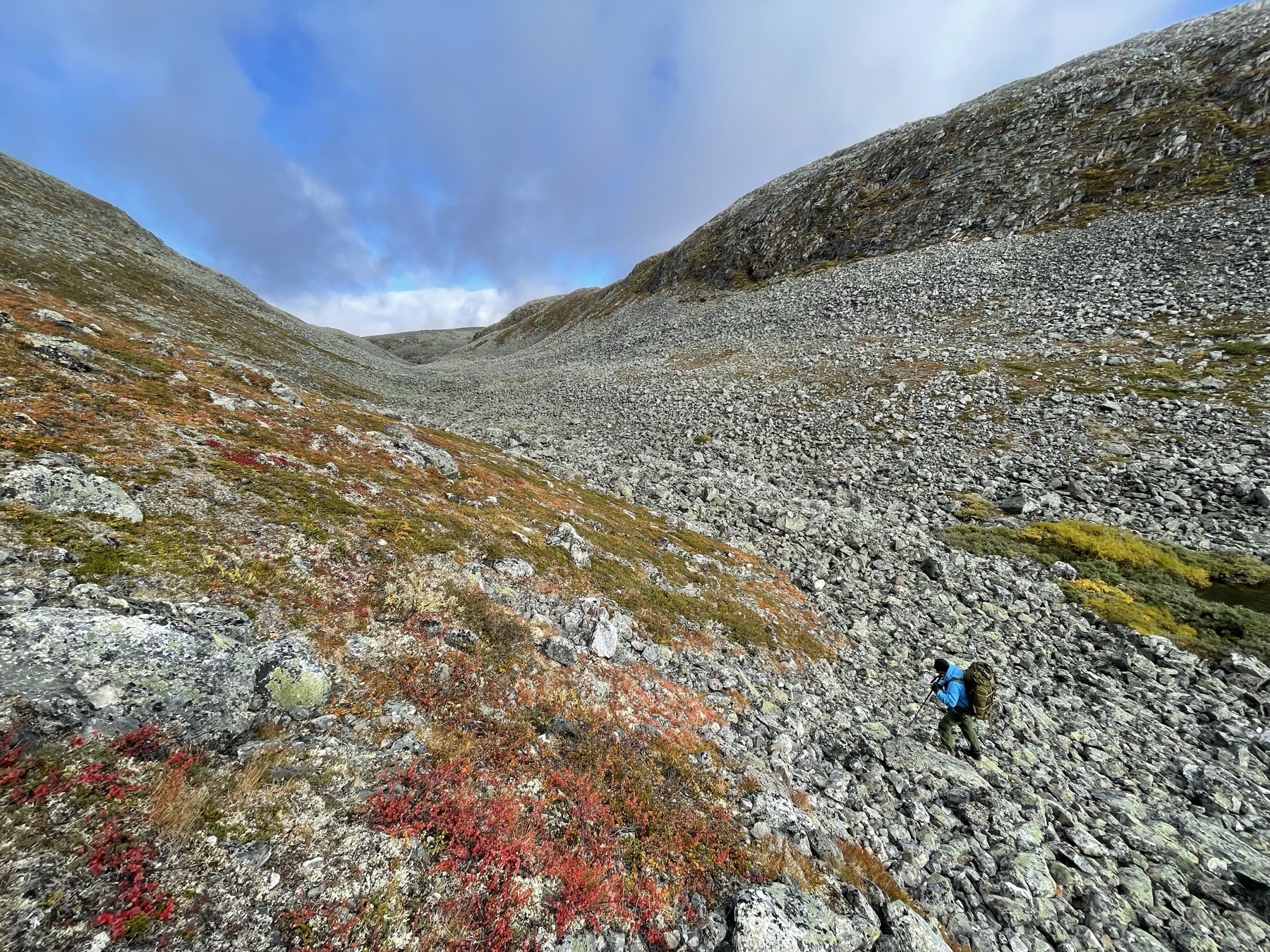
In September 2021, one day of a hike in Kilpisjärvi included roughly eleven kilometres across a boulder field.
A boulder field is honest terrain. It makes no attempt to look easy. There are rocks in every direction, your eyes stay on your feet, and at some point your backpack starts to feel heavier than it probably should. Progress does not happen unnoticed.
After the trip, I wrote that Type Two Fun had been very much present. I had come across the term as a description of something that may not feel enjoyable while it is happening but becomes enjoyable to remember later.
The idea stayed with me. Why would anyone voluntarily spend their free time doing things that leave them tired, cold or with a knee that had been operated on starting to ache?
A hobby that might have faded away
Early in the pandemic, I found my way back into nature. I had fished and spent time outdoors when I was younger, so this was not an entirely new world. It had simply moved into the background for a while.
When travel, restaurants and many ordinary activities became difficult, something else took their place. I spent time on the coast chasing sea trout in rough weather, hiking across Lapland's boulder fields and ski touring around Finland.
At one point I wondered whether the enthusiasm would disappear when the rest of the world opened again. It did not. Being outdoors took a fairly strong place in my life.
That surprised me a little. I cannot claim that every trip was pleasant. Sometimes I was exhausted. It rained, I was cold, my backpack was too heavy or my knee made its presence known. If every hour of free time had to feel as comfortable as possible in the moment, many of those trips would never have happened.
Sometimes the good feeling arrives later
Part of what makes these trips rewarding is that everything is not effortless all the time. When the strain ends, you get food and pull on warm clothes, the feeling is remarkably good. Very ordinary things briefly regain the value they deserve.
That may be why Type Two Fun felt so accurate. It does not turn wet socks or an aching knee into pleasant experiences afterwards. It simply recognizes that the value of an experience and how comfortable it feels in the moment do not always move together.
In daily life, we quite sensibly remove much of our discomfort. Indoors is warm, food is nearby and wet clothes can be changed for dry ones. When life is generally comfortable, a voluntary trip outdoors brings up a few simple questions: can I manage the next kilometre, am I warm enough, and when do we eat?
Answering them does not require a particularly sophisticated theory. Usually it requires taking the next step.
Voluntary is an important word here. The strain of a trip is something I have chosen, and afterwards I can return to warmth. It would be strange to romanticize discomfort that someone did not choose or cannot escape. Nor do I think everyday life should be made deliberately more difficult simply because comfort seems suspicious.
On a trip, my relationship with difficulty is different. I chose to go even though I knew every hour would not feel good. I also knew why I wanted to continue. That is the most interesting part of Type Two Fun for me: an experience does not have to be judged only by its hardest moment.
Let the boulders be boulders
It would be easy to turn this into a metaphor about work, goals or perseverance. This time, I will not. Every hobby does not need to become a lesson, and an aching knee does not make anyone a better leader.
The observation I find more interesting is smaller. Good free time does not always mean easy free time. Sometimes the best part of a day only becomes clear after the day is over.
The Kilpisjärvi trip left me with a photograph. When I posted it, the same caption mentioned the day's roughly eleven kilometres of boulders and Type Two Fun. Those two things fit comfortably into the same day.