Case studies

This page includes a few examples of situations where I have been involved.

Role fit

Steady Investor: building a multilingual investing education brand and digital service from the ground up

Summary

Role

  • Growth
  • Marketing
  • Project management
  • Leadership

Context

I built Steady Investor based on a simple observation: there is no shortage of investing content, but beginners still struggle to find a calm, clear, and Europe-relevant starting point for long-term investing.
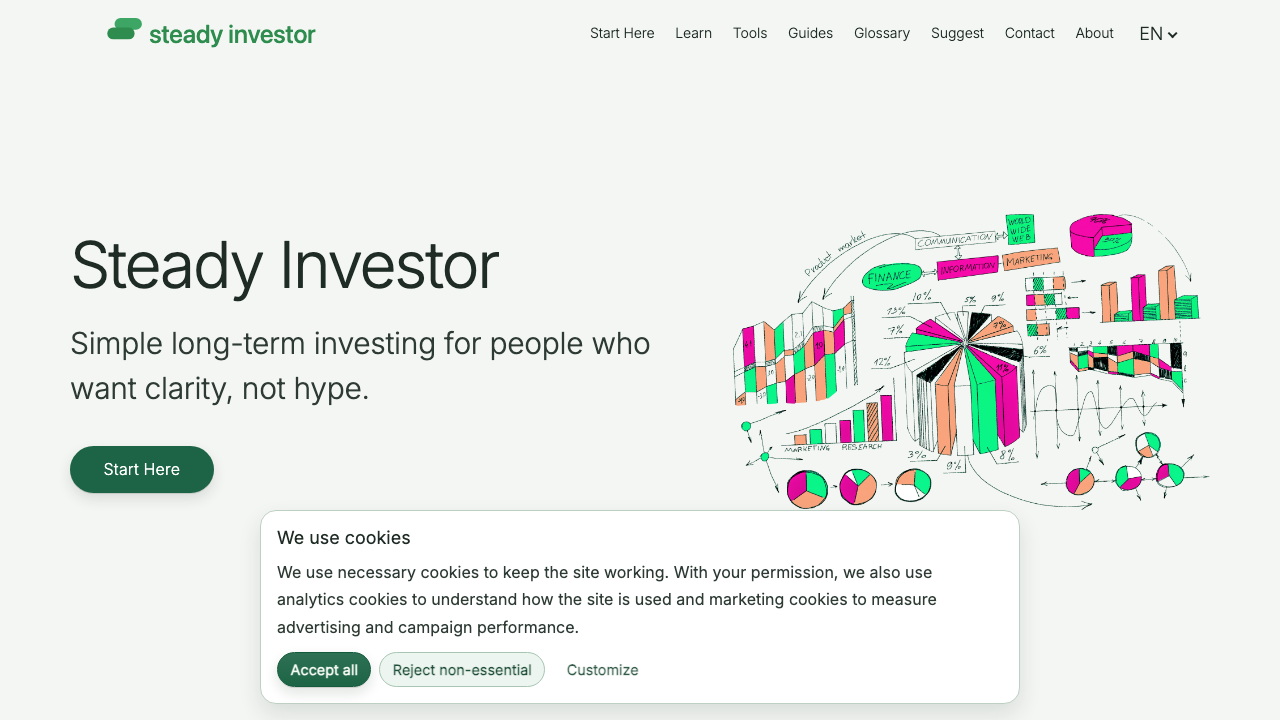
steadyinvestor.eu
Steady Investor homepage shown inside a browser frame.
1

Context and challenge

Context

I built Steady Investor based on a simple observation: there is no shortage of investing content, but beginners still struggle to find a calm, clear, and Europe-relevant starting point for long-term investing. The goal was not to publish isolated articles, but to build a credible digital service where brand, messaging, content, structure, and practical usability reinforce each other.

Challenge

The challenge was to design and launch the full setup from scratch: clear positioning, an audience-appropriate tone of voice, a multilingual content model, a strong SEO structure, analytics and marketing fundamentals, and a technical foundation that is robust enough to run in production and evolve over time. The whole service had to feel coherent, not like separate layers stitched together.

2

Actions

Actions

I defined a position centered on clarity, calm, long-term thinking, and practical guidance instead of hype. In parallel, I built the tone of voice to be expert but approachable, credible but not rigid. I designed the site architecture to connect learning content, a concept glossary, practical tools, and trust-supporting pages into one product experience. SEO was built into the product from day one: site structure, URL logic, metadata, hreflang setup, sitemaps, robots controls, and internal linking were all designed to support both discoverability and usability. I also implemented the analytics and measurement baseline, Meta Pixel, cookie consent logic, and privacy/terms content. On top of that, I handled hands-on implementation with a modern web stack and used AI-assisted workflows to support content production, structure, localization, and development.

3

Results

Results

The result was a live multilingual digital service where brand, content, tools, SEO, analytics, and technical architecture form one consistent whole. Through the project, I built a credible and coherent digital brand, a clear tone of voice across content types, a scalable multilingual content structure, a strong technical and editorial SEO foundation, and the measurement and marketing infrastructure needed for future growth. This case demonstrates how I combine strategic thinking, marketing, content, SEO, digital product design, and hands-on execution into one practical end-to-end outcome.

4

Tools, methods, and key learnings

Tools/Methods

Brand building, positioning, tone-of-voice design, content strategy, information architecture, SEO planning, multilingual content modeling, analytics, consent and privacy design, digital product development, modern web technology, and AI-assisted workflows.

What I learned

This project reinforced that a strong digital service only emerges when brand, content, discoverability, measurement, technical execution, and user experience are designed from the same strategy. It also deepened my ability to use AI in practical production work without losing direction, quality, or credibility.

1/4

Restoring performance after a merger, +30% efficiency improvement

Summary

Role

  • Change management
  • Leadership
  • Project management
  • Growth

Context

I took over the e-commerce business unit at Fonecta when the unit was in a difficult situation after a merger and earlier decisions.

Key result

+30% efficiency improvement

1

Context and challenge

Context

I took over the e-commerce business unit at Fonecta when the unit was in a difficult situation after a merger and earlier decisions. The team was overloaded, customer dissatisfaction had increased, and delivery quality had declined. Work was not being completed well enough or efficiently enough, and billable utilization had dropped clearly. Overall, the unit's performance was far below what the business required.

Challenge

This was not only an operational issue but a combination of overloaded day-to-day work, unclear ways of working, and too passive leadership. When goals, routines, and follow-up were not clear enough, capacity was used in the wrong places, unfinished work accumulated, and customer-facing quality suffered. At the same time, team well-being weakened further. The challenge was to improve business results, restore control of execution, and rebuild the team's confidence that the work was manageable again.

2

Actions

Actions

I started by identifying the real root causes in detail. I reviewed performance data and worked closely with the team to make both execution bottlenecks and day-to-day friction visible. Based on this, I built a transformation program and implemented it in practice together with the team lead and managers. We changed ways of working, clarified goals, and built a more active leadership model around execution. Project routines were redesigned, follow-up was sharpened, and weekly leadership cadence was increased. A key principle was that change could not stay at the level of high-level guidelines: new routines had to be tracked tightly in everyday work and corrected quickly if execution started drifting back to old habits.

3

Results

Results

The first clear improvements were visible within a few months. Billable utilization improved by over 30%, and in practice the unit's revenue grew at a similar rate. Production throughput improved clearly, customer satisfaction increased, and team overload eased. After the change, the unit delivered the best performance among the company's expert units, despite the exceptionally difficult starting point.

4

Tools, methods, and key learnings

Tools/Methods

The core of this work was not one specific tool but a way to lead change. I built the whole program on data, day-to-day observations, and active leadership. In practice this meant performance analysis, goal clarification, redesign of project practices, weekly leadership rhythm, and tight follow-up especially around utilization and completion capability. The essential part was making expectations and responsibilities visible and ensuring the new operating model was truly reflected in everyday work.

What I learned

This case reinforced that even difficult situations can improve quickly when root causes are identified honestly and leadership is brought back close to everyday execution. Change does not come only from new structures or targets; it comes from clarity, support, and a consistent direction for people. When leadership is active and expectations are clear, even an overloaded team can return to strong performance. This is a strong example of how I combine people leadership, operational development, and business accountability into concrete results.

1/4

Controlled business unit ramp-down in a difficult situation

Summary

Role

  • Change management
  • Leadership

Context

At Fonecta, a group-level strategic change required a reassessment of the future of the e-commerce business unit.

Key result

The ramp-down was completed on schedule and fully on budget.

1

Context and challenge

Context

At Fonecta, a group-level strategic change required a reassessment of the future of the e-commerce business unit. As a result, we had to execute a controlled ramp-down over a transition period. This was not just about ending operations, but about managing a full system of customer commitments, people, systems, timelines, and financial constraints at the same time.

Challenge

In this kind of situation, the challenge is not only operational but also deeply human. The unit had to be ramped down in a controlled way so that customer service continued, production remained stable until the end, and costs stayed within planned limits. At the same time, the situation had to be led in a way that preserved trust and motivation even under difficult circumstances. In practice, this required balancing financial discipline, customer risk, technical execution, and people leadership.

2

Actions

Actions

I designed and led the full ramp-down from start to finish. I built a phased plan combining prioritization, budgeting, communication, customer risk management, and team support throughout the transition. I also owned budget planning and tracking, with decision authority over the full execution. The unit had just under 20 people across development, design, and accounts. During the transition, the key was to keep execution under control and ensure production remained stable until the end, even as headcount decreased. In practice this meant clear phase planning, transparent communication, continuous reassessment, and individual-level support for people. On the customer side, the target was to preserve satisfaction and service continuity as well as possible across the entire transition. In parallel, all systems and processes had to be ramped down in a controlled way without letting operational quality collapse midstream.

3

Results

Results

The ramp-down was completed on schedule and fully on budget. Customer satisfaction and service continuity were maintained in a controlled way despite a highly sensitive and complex starting point. Team members remained committed through the full process, which was critical to success. Leadership was satisfied with the outcome, and the employee experience remained as strong as realistically possible in the circumstances. Personally, it was meaningful that I could support people forward and help them find new opportunities in a difficult transition.

4

Tools, methods, and key learnings

Tools/Methods

The core method in this work was phased change leadership. I used scenario planning, precise budgeting, active change communication, and practical operational planning. The key was building an integrated operating model where customer risk, people impact, system ramp-down, and financial control were managed as one whole instead of isolated tracks.

What I learned

This case reinforced that success in the hardest decisions ultimately depends on trust. People commit even in difficult transitions when the rationale is communicated honestly, expectations are clear, and leadership stays consistent through the whole process. I also learned that a controlled ramp-down requires just as much leadership as building growth: precision, decision quality, empathy, and the ability to hold the whole together under pressure.

1/4

Sales automation and performance improvement in a growth company

Summary

Role

  • Sales
  • Marketing
  • Growth
  • Leadership

Context

At Eeco, the goal was to grow B2B sales profitably, but it was clear that the existing approach would not scale by adding manual work.

Key result

With the model in place, we delivered around one million euros in annual e-commerce platform sales with just two salespeople.

1

Context and challenge

Context

At Eeco, the goal was to grow B2B sales profitably, but it was clear that the existing approach would not scale by adding manual work. We sold e-commerce platforms, integrations, ongoing development, and services such as marketing automation to SMBs. Deal sizes ranged from tens of thousands to several hundred thousand euros, and sales cycles were relatively long. To support growth, we needed a clearer and more efficient way to lead the full sales process.

Challenge

Without a unified process, sales work became person-dependent and difficult to predict. Salespeople spent significant time on repetitive tasks such as outreach, follow-ups, meeting coordination, and sending materials. At the same time, sales quality varied, and onboarding new ways of working was heavier than it should have been.

2

Actions

Actions

I designed and implemented the full sales process end to end. I built a model that moved systematically from identifying the right prospects to outreach, follow-up actions, meeting scheduling, and meeting preparation. I was involved in selecting and building supporting tools, created process guidance, and embedded the model into day-to-day sales execution. The goal was to remove unnecessary manual work and make sales as smooth, consistent, and high quality as possible without making customer interactions mechanical.

3

Results

Results

With the model in place, we delivered around one million euros in annual e-commerce platform sales with just two salespeople. Time use improved clearly, and several hours of manual routine work were removed from weekly workload. Sales quality became more standardized, customer experience improved, and execution became more predictable. The model also made onboarding easier for new team members. After the acquisition, parts of these practices were also adopted at Fonecta.

4

Tools, methods, and key learnings

Tools/Methods

The key in this work was sales process stage design, smart automation, and practical rollout. I built the model so that systems supported active outbound sales, systematic follow-up, and smooth customer communication. The essential point was not automation itself, but that the process freed time for higher-quality selling.

What I learned

This case reinforced that scaling sales does not come from activity volume alone, but from making high-quality execution repeatable. When the process is built well, sales is not dependent on individuals; it can be led, forecasted, and improved systematically. A strong process also improves customer experience because communication is consistent and well prepared.

1/4

From a digital agency to an e-commerce-focused growth company

Summary

Role

  • Marketing
  • Change management
  • Leadership

Context

BGH was a small digital agency specialized in digital marketing, serving both B2B companies and e-commerce businesses.

Key result

In the following years, the company grew 35-75% per year, and profitability rose from 6% to 20%.

1

Context and challenge

Context

BGH was a small digital agency specialized in digital marketing, serving both B2B companies and e-commerce businesses. We delivered a broad mix of digital marketing, digital services, websites, and automation. Over time, our client base included more and more e-commerce companies, and we saw that this was where we could create the most value because of our own e-commerce background.

Challenge

At the same time, the market was clearly looking for more focused specialists. There were few truly specialized players in e-commerce, and we saw an opportunity to build a company that understood merchants’ day-to-day reality, growth priorities, and commercial challenges more deeply than most. The challenge was making this shift credible to customers, the market, and our own team.

2

Actions

Actions

I helped shape the new strategy and decide the strategic shift. My main responsibility was turning that change into concrete updates in sales, marketing, and brand. This was not just a name change, but a full refocus of the business. We built a new strategy around e-commerce, renewed the brand, and transitioned from BGH to Eeco Oy. At the same time, we clarified our positioning, built a new narrative, and created a marketing plan that made the new direction visible in day-to-day execution. The change extended to our service portfolio, processes, tools, and capabilities. The goal was to build a coherent operating model that supported the new focus credibly in every customer touchpoint. The shift was carried out in phases, with the brand renewal and commercial messaging at the core. I led the practical work on narrative, messaging, and commercial approach so the new direction stayed consistent both internally and externally. The change also gained external visibility, including coverage in Kauppalehti. The team became energized and committed strongly to the new direction.

3

Results

Results

The shift in direction gave the company a clearer focus, better differentiation, and a stronger growth path. In the following years, the business grew by 30–75% annually, profitability improved from around 6% to 20%, and headcount grew from roughly eight people to 25. The company was ultimately sold. So this was not only a brand change, but a business direction change that showed up in growth, profitability, and the company’s market position.

4

Tools, methods, and key learnings

Tools/Methods

This case reflects my way of combining strategic direction shifts, commercial leadership, and hands-on execution. The change did not come from a single decision, but from making the new focus visible across brand, sales, marketing, services, and operating practices.

What I learned

I also learned that successful repositioning requires more than a new name or service promise. Credibility comes from the market understanding the new direction, the team committing to it, and execution supporting the same story in practice. In this work, one of my strengths was the ability to combine strategy, communication, commercial development, and operational delivery into one coherent change. We also saw how much a compelling brand matters internally, not only for customers. Culture was built around a strong brand and the stories behind it.

1/4